Chinese, explained
Happy Birthday in Chinese: Taiwan Family Tradition
To say happy birthday in Chinese, say 生日快樂 (shēngrì kuàilè). The phrase means "wishing you a happy birthday" and is used by families across Taiwan at birthday gatherings, alongside longevity noodles and red eggs. Whether you are a heritage family raising a child with Mandarin or preparing for a visit to Taiwan, 生日快樂 is one of the most useful phrases you will learn. This guide covers the characters, the pronunciation tone by tone, the traditional Chinese characters Taiwan uses, and the birthday customs you are likely to see at a Taiwan family table.
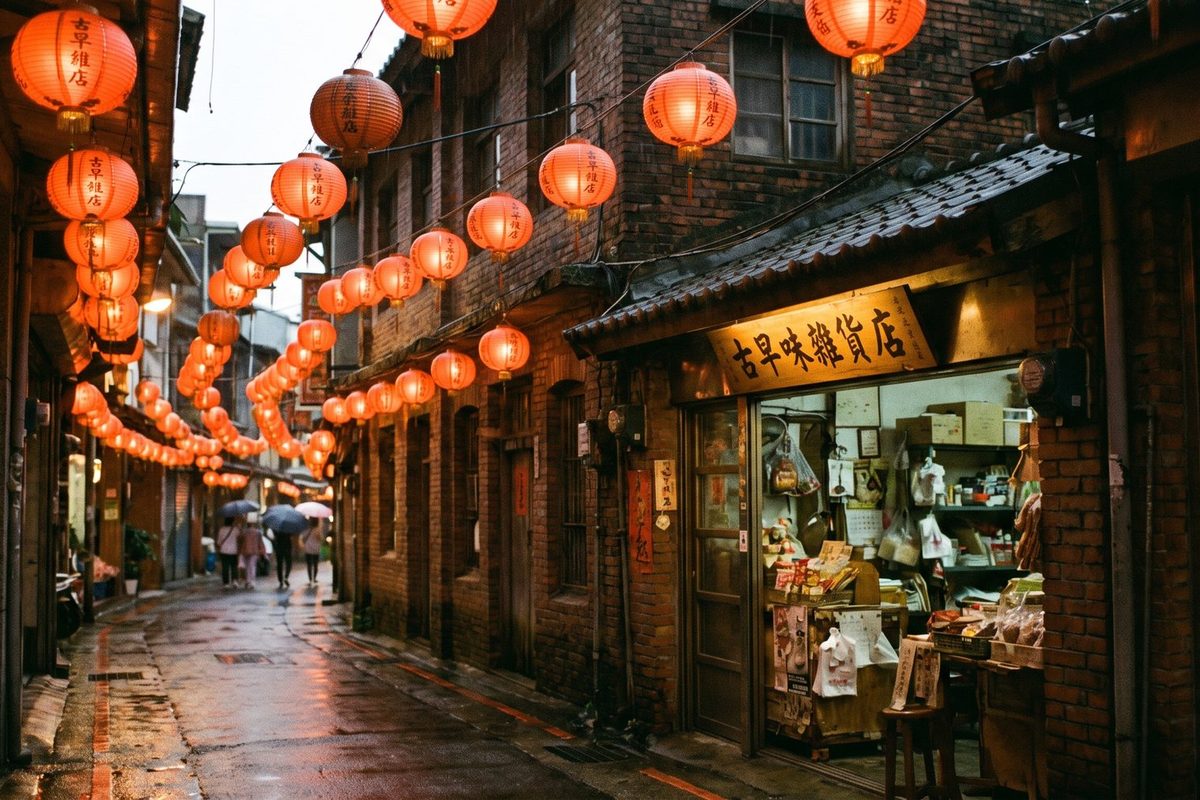
Happy birthday in Chinese is a phrase you will hear at family tables across Taiwan, spoken the moment someone carries in the noodles or sets down the birthday cake. This guide explains the phrase from the characters outward — how each one is written, what each one means, and how to say the whole thing so it sounds natural. It also covers the customs that give the phrase its warmth in Taiwan families, and a set of related birthday vocabulary you can use in conversation. For a deeper look at the written form, the guide to saying and writing happy birthday in traditional Chinese characters covers stroke order and character structure in detail.
The phrase 生日快樂 — characters, pinyin and meaning
The Chinese phrase for happy birthday is 生日快樂. In pinyin, it is written shēngrì kuàilè. Each of the four characters carries its own meaning, and together they form a natural wish.
生 (shēng) means "life" or "to be born." 日 (rì) means "day" or "sun." Put together, 生日 (shēngrì) means "birthday" — literally "the day of birth." 快 (kuài) means "happy" or "joyful" in this context. 樂 (lè) also means "happy," "joyful" or "content." Put together, 快樂 (kuàilè) means "happiness" or "joyfulness." So 生日快樂 says "birthday happiness" — a joyful wish for the person's special day.
The phrase is complete on its own. You say it directly to the birthday person. At a Taiwan birthday gathering, you will hear it said by parents to a child, by grandparents to grandchildren, and by everyone at the table when the noodles or cake arrives. Happy birthday in Chinese requires no extra words — 生日快樂 carries the full wish.
How 生日快樂 sounds — tone-by-tone pronunciation guide
Mandarin Chinese uses four tones plus a neutral tone. Getting the tones right changes the meaning, so it is worth going through each syllable of shēngrì kuàilè carefully.
- shēng — first tone, high and level. Hold it steady, like a singer holding a long note. This is the syllable for 生 (life, birth).
- rì — fourth tone, sharply falling. Start high and drop fast. This is 日 (day). The "r" in Mandarin pinyin is a retroflex sound: curl the tip of your tongue up slightly as you say it.
- kuài — fourth tone, sharply falling again. This is 快 (happy, fast). The "uai" sounds like "why" with a "k" in front: "kwhy."
- lè — fourth tone, sharply falling. This is 樂 (joyful). The "e" here is a short, open vowel — say "luh" and drop the pitch.
The pattern is: HIGH — FALL — FALL — FALL. Try saying it slowly: shēng … rì … kuài … lè. Then run the syllables together: shēngrì kuàilè. The rhythm has a natural pause between 生日 and 快樂, which mirrors how the two words pair up in meaning.
Tip: Listen to a native Mandarin speaker say the phrase. Apps that show tone marks on each syllable, or audio dictionaries like Forvo, can help you hear the difference between a first-tone shēng and a fourth-tone rì side by side.
Traditional Chinese characters versus simplified Chinese
Taiwan writes Chinese in traditional characters. The phrase happy birthday in traditional Chinese is 生日快樂. If you have seen the simplified Chinese version, it looks like this: 生日快乐. The difference is in the last character. Traditional 樂 has more strokes. Simplified 乐 is a reduced form used in mainland China and Singapore.
When you write happy birthday in Chinese characters for a card or message to a family in Taiwan, use the traditional form: 生日快樂. Using the traditional form shows care and shows that you know which writing system Taiwan uses. Schools and official documents in Taiwan use traditional characters, and so do birthday cards, red envelopes and decorations at family celebrations.
The other three characters — 生, 日, 快 — look the same in both systems. Only 樂 differs. If you are helping a child learn to write the phrase, start with the simplified 乐 to understand the shape, then work up to the traditional 樂 with its fuller structure.
Happy birthday in Chinese written for a Taiwan audience always means 生日快樂 in traditional characters. If you are unsure which form to use in a message, go with traditional — it is the form that families, grandparents and teachers in Taiwan read every day.
How families in Taiwan celebrate birthdays
Taiwan birthday traditions blend Taiwanese and Chinese customs that have been part of family life for generations. 生日快樂 is the spoken heart of the celebration, but the customs around it tell just as much about how families mark the day.
Longevity noodles
Longevity noodles (壽麵, shòumiàn) are one of the most common birthday foods in Taiwan. The noodles are served long and uncut — cutting them is considered bad luck because length represents a long life. The person celebrating their birthday eats the noodles whole, slurping them up without biting through. Family members say 生日快樂 and 祝你長壽 (zhù nǐ cháng shòu — wishing you a long life) as the dish is served.
Red eggs
Red-dyed eggs (紅蛋, hóng dàn) appear at milestone birthdays — especially for newborns at their one-month celebration and for older family members at big round-number birthdays. The red colour signals good luck and new life. Families hand them out to relatives and neighbours as a way of sharing the celebration.
Birthday cake and the song
Western-style birthday cakes entered Taiwan birthday culture decades ago and are now universal at children's parties. Families gather around the cake, light candles, and sing the birthday song — which in Taiwan is usually sung in both Mandarin and Taiwanese (Hokkien). In Mandarin, the birthday song uses 生日快樂 as its refrain, with the melody almost identical to the English "Happy Birthday to You." Yes, Taiwanese families do sing a birthday song, and it is built around the phrase 生日快樂.
Family gatherings and red envelopes
Big birthdays — the first year, the tenth, sixtieth, and beyond — bring extended family together for a meal. Grandparents often give red envelopes (紅包, hóngbāo) containing money, the same kind given at Lunar New Year. The number of candles on the cake, the choice of restaurant, and who is invited all carry meaning. Throughout the meal, 生日快樂 is said many times — not only once, but whenever someone raises a glass or arrives late to the table.
Understanding these customs gives the phrase 生日快樂 its full weight. It is not just a phrase — it arrives with noodles, red eggs, song and family. Learning how Taiwan families use the words alongside Chinese family vocabulary can help you join in naturally when the celebration starts.
More birthday vocabulary in Chinese
Knowing 生日快樂 is a strong start, but a few extra words will let you take part in the full birthday conversation. Here are six useful terms with their pinyin and meanings.
Chinese | Pinyin | Meaning |
|---|---|---|
生日 | shēngrì | birthday |
蛋糕 | dàngāo | cake |
許願 | xǔyuàn | to make a wish |
長壽 | cháng shòu | long life, longevity |
祝你 | zhù nǐ | wishing you (used before a good wish) |
蠟燭 | làzhú | candle |
You can combine several of these in simple birthday sentences:
祝你生日快樂!(Zhù nǐ shēngrì kuàilè!) — Wishing you a happy birthday!
你幾歲了?(Nǐ jǐ suì le?) — How old are you?
許個願吧!(Xǔ ge yuàn ba!) — Make a wish!
吹蠟燭!(Chuī làzhú!) — Blow out the candles!
祝你長壽!(Zhù nǐ cháng shòu!) — Wishing you a long life!
The phrase 祝你生日快樂 is the fuller version of the birthday wish — 祝你 means "wishing you," so the phrase becomes "I wish you a happy birthday." You will hear this form in the birthday song and in written messages. For spoken conversation, 生日快樂 on its own is completely natural and warm.
Frequently asked questions
How do you pronounce 生日快樂 (shēngrì kuàilè)?
You say shēng (high level tone) — rì (sharp falling tone) — kuài (sharp falling tone) — lè (sharp falling tone). The first syllable holds steady and high; the remaining three drop in pitch. Run them together as two words: shēngrì (birthday) and kuàilè (happiness). Many learners find it helpful to practise each word separately before joining them. A reliable way to check your tones is to listen to a native speaker using an audio dictionary or a language exchange with a Mandarin speaker you know.
What is the difference between traditional and simplified Chinese birthday wishes?
In traditional Chinese, happy birthday is 生日快樂. In simplified Chinese, it is 生日快乐. The difference is in the final character: traditional 樂 has more strokes, while simplified 乐 is a reduced form. Taiwan uses traditional characters, so if you are writing a birthday card for a family in Taiwan or for a child learning Mandarin through Taiwanese culture, write 生日快樂. Mainland China and Singapore use the simplified form 生日快乐. The pronunciation — shēngrì kuàilè — is the same in both writing systems.
Do Taiwanese families sing "Happy Birthday"?
Yes. Taiwanese families do sing a birthday song, and it closely follows the melody of the English "Happy Birthday to You." The Mandarin lyrics use 生日快樂 as the central wish, and the song is typically sung first in Mandarin and then repeated in Taiwanese Hokkien at family gatherings. At children's birthday parties, the Mandarin version is most common. At multigenerational gatherings with grandparents and older relatives, you are likely to hear both languages, one after the other, while everyone stands around the birthday cake with its candles lit.
Keep learning Chinese
生日快樂 is one of the phrases that travels best between languages — everyone knows what a birthday wish sounds like, so the context is always clear. That makes it a good anchor for learning the four Mandarin tones, since each syllable in shēngrì kuàilè sits in a different tonal category.
If you are helping a child learn Mandarin, Coachers.org teaches Chinese through Taiwan stories to children aged 5 to 12. Its online courses use videos, worksheets, and vocabulary and sentence cards. Units are built around five themes — Home, Family, Food, Place and Feelings — and each unit begins with a story, a cultural theme or a real-life experience. The Family theme covers the words children use at home and at family gatherings, including the vocabulary that makes celebrations like birthdays meaningful in Mandarin.
If you are not sure which level fits your child, you can ask on the contact page. The three levels — Bridge, Connect and Express — are set by where a child is, not by school grade.