Chinese, explained
Master What Is This in Mandarin: 3 Easy Steps
You want to ask "What is this?" in Mandarin? It's '這是什麼?' (Zhè shì shénme?). This phrase directly translates to "This is what?". Learning what is this in mandarin is crucial for any beginner. It opens basic communication in Mandarin Chinese. You can easily ask about new objects. This guide will show you how. We will cover pronunciation, characters, and usage in simple steps. Your Chinese language journey starts here.
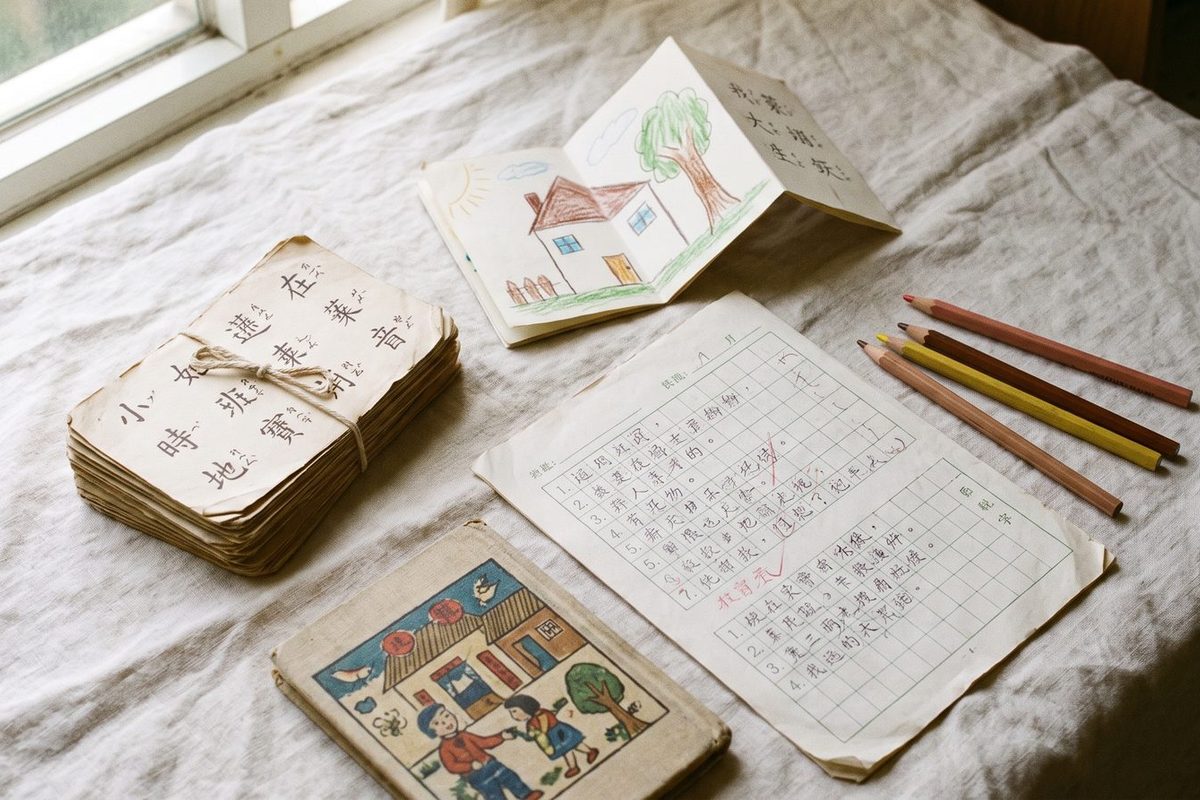
Before practising the full question, learn how to say this in Chinese: 這 (zhè) means "this," while 這個 (zhège) means "this one." The guide also distinguishes asking an object’s name from asking how to say a word.
Once you can ask "what is this?" with 這是什麼, flip the pattern to state who you are: 我是 (wǒ shì) means "I am." See our guide to wo shi meaning for tones, grammar, and common beginner mistakes.
Key Takeaways
- Learn "這是什麼?" (Zhè shì shénme?). It means "What is this?". This phrase helps new learners.
- Understand Pinyin. It helps you read Chinese words. Pinyin uses letters you know. It shows how to say Chinese sounds.
Practice Mandarin tones. Tones change word meanings. Correct tones help people understand you.
Learn Chinese characters. Examples are "這" (this), "是" (is), and "什麼" (what). This helps you understand the language better.
Keep practicing. Say the phrase with friends or a native speaker you know. You will speak with confidence.
Step 1: Core Phrase & Pinyin for Mandarin
The Phrase "What Is This?" in Mandarin
You are ready to learn your first full phrase in Mandarin. The phrase is "What is this?" in Mandarin. You already know it is '這是什麼?' (Zhè shì shénme?). This phrase is very useful. It helps you ask about things you do not know.
Zhè Shì Shénme: Your First Mandarin Phrase
Let's look at 'What is this?' (Zhè shì shénme). This is your starting point for asking questions in Chinese. You say "What is this?" (Zhè shì shénme?) when you want to identify an object. It is a simple and powerful phrase. Mastering this phrase helps you begin your journey in Mandarin Chinese.
Pinyin Breakdown for Easy Reading
Now, let's break down the Pinyin for 'What is this?' (Zhè shì shénme?). You will see how each part sounds. Pinyin helps you read Chinese words. It uses letters you already know.
這 (zhè): This means "this." You pronounce it with a falling tone.
Pinyin with tone mark: zhè
Numerical tone indicator: zhe4
是 (shì): This means "is" or "to be." You also pronounce it with a falling tone.
Pinyin with tone mark: shì
Numerical tone indicator: shi4
什麼 (shénme): This means "what." The first part has a rising tone, and the second part is a neutral tone.
Pinyin with tone mark: shénme
Numerical tone indicator: shen2 me5
You can see the special sounds in Pinyin. Look at 'zh' and 'sh'. These sounds are unique in Chinese.
Pinyin | IPA | English Equivalent | Articulation Notes |
|---|---|---|---|
zh | /[ʈ͡ʂ]/ | Similar to 'ch' in English 'chat' | Retroflex articulation, no aspiration |
sh | /[ʂ]/ | Similar to English 'sh' | Retroflex articulation |
You make these sounds by curling your tongue back. This is called retroflex articulation. You do not let out a puff of air for 'zh'.
Sometimes, in fast speech, you might hear 'shénme' sound a bit different. People might say it faster. This is a common thing in language. Sounds can change to match nearby sounds. For example, 'shénme' can sometimes sound like 'shém' when people speak quickly. You might even hear it as 'semme' in very quick or slurred speech. This is like how "suo yi" (so) might sound like "so yi" in English. These small shifts happen in natural Chinese conversation. Do not worry too much about these small changes now. Focus on the standard pronunciation first. You will pick up these natural speech patterns later. Understanding the Pinyin helps you speak correctly. You are learning the building blocks of Mandarin. These characters are important.
Step 2: Decoding Mandarin Chinese Characters
You have learned the Pinyin for "這是什麼?". Now, you will look at the individual Chinese characters. Understanding these characters helps you grasp the language better. Each character tells a story.
Understanding "這" (Zhè): This
The first character is 這 (zhè). It means "this." You use it to point out something close to you. Think of it as saying "this object" or "this person."
Historically, the character '這' was borrowed. It represented the demonstrative pronoun 'zhè' ('this'). Classical Chinese used different terms. This character later became simplified to '这'. The simplification of characters also affected phrases like 'zhèlǐ' ('here'). It changed from '這裏/這裡' to '这里'.
The traditional form of 'zhè' is '這'.
The simplified form of 'zhè' is '这'.
You will mostly see the simplified form in modern Chinese.
Grasping "是" (Shì): Is/To Be
Next, you have 是 (shì). This character means "is" or "to be." It acts like the verb "to be" in English. It links nouns. It remains unchanged in form. You can use it to express "am," "is," or "are." For example, "I am human" or "He is American."
'是' (shì) has several grammatical functions:
Indicating Equivalence or Category: '是' links a subject and object. These are typically nouns. They show they are equivalent or belong to the same category.
Indicating Explanation or Characteristics: '是' can also provide an explanation. It describes characteristics.
Indicating Existence: In some cases, '是' indicates existence. It often pairs with a location word as the subject.
You also find '是' in special constructions. The 是…的 (shì…de) construction discusses past events. It emphasizes specific information. This includes the time, manner, or place. For example, it highlights when something happened. It shows how it happened. It also shows when it was delivered.
However, be careful with '是'. Non-native speakers often make mistakes:
You should not use '是' to connect a noun/pronoun and an adjective. For instance, '花是紅' (Huā shì hóng - The flower is red) is incorrect. The correct form is '花很紅' (Huā hěn hóng).
You should not use '是' to express existence in a place. Instead, '在' (zài) should be used. For example, '我在學校' (Wǒ zài xuéxiào - I am at school).
You should not use '是' for "there is/are" constructions. Mandarin uses '有' (yǒu) for this purpose. Sentences structure as "some place has something." For example, '房子外面有一個花園' (Fángzi wàimiàn yǒu yīgè huāyuán - There is a garden outside the house).
Do not assume '是' always translates to "to be." It does not always mean "is, am, are, were, was."
Do not use '是' with adjectives. Adjectives in Chinese often function as verbs. They do not require '是'. For example, "I am good" should be '我很好 (wǒ hěn hǎo)' instead of '我是好 (wǒ shì hǎo)'.
Learning "什麼" (Shénme): What
Finally, you have 什麼 (shénme). This is your key Chinese question characters. It means "what." You use it to ask about unknown things. It is a versatile word.
'什麼' appears in many common phrases:
這是什麼意思? (Zhè shì shénme yìsi?): This means "What does this mean?" You can replace the subject. For example, "這句話是什麼意思?" (What does this sentence mean?).
這代表什麼? (Zhè dàibiǎo shénme?): This asks "What does this represent?" It suits symbols or abstract concepts. For example, "這個顏色代表什麼?" (What does this color represent?).
這個有什麼含義? (Zhège yǒu shénme hányì?): This translates to "What does this signify?" You use it for deeper meanings. For example, "這首詩有什麼含義?" (What does this poem signify?).
你這話是什麼意思? (Nǐ zhè huà shì shénme yìsi?): You use this to ask someone directly what they mean. For example, "你說我做得不好,你這話是什麼意思?" (You said I didn’t do well, what do you mean by that?).
這句話什麼意思? (Zhè jù huà shénme yìsi?): This is a concise way to ask "What does this sentence mean?" For example, "你的簡訊什麼意思?" (What does your text message mean?).
These phrases show how useful '什麼' is in daily Chinese conversation.
Putting It All Together: 這是什麼?
You have now broken down each character. You understand 這 (zhè) as "this." You know 是 (shì) means "is/to be." You recognize 什麼 (shénme) as "what." When you combine them, you get 這是什麼? (Zhè shì shénme?). This phrase directly translates to "This is what?" It is a simple yet powerful question. It allows you to inquire about anything unfamiliar. Mastering these individual characters and their meanings helps you build a strong foundation in Mandarin Chinese. You are now ready to ask "What is this?" with confidence.
Step 3: Pronunciation & Practical Use
Tones Made Simple: Mastering Mandarin Tones
You have learned the Pinyin and characters. Now, you will master the tones for "What is this?" (Zhè shì shénme?). Correct pronunciation is key in Chinese. Each word has a specific tone.
這 (zhè): This is a fourth tone. You say it with a sharp, falling sound. Imagine a firm "No!"
是 (shì): This is also a fourth tone. It has the same sharp, falling sound.
什麼 (shénme): 什 (shén) is a second tone. You say it with a rising sound, like asking "Huh?" 麼 (me) is a neutral tone. It is light and quick.
You can master these tones. Practice each tone in isolation. Hear and produce them correctly. Mnemonics are very effective. Visualize the first tone as a high, flat plateau. See the fourth tone as a sharp downward slope. This helps you recall the pitch contours. Consistent practice is crucial for mastery. You can also record yourself. Compare your speech with native speakers. This helps you refine your pronunciation.
Common Scenarios for "What Is This?"
"What is this?" (Zhè shì shénme?) is a powerful phrase. You can use it in many everyday situations. It is perfect for travelers.
Asking about an object: You see something new in a market. Point to it and ask, "What is this?"
Identifying food: You are at a restaurant. You see an unfamiliar dish. Ask your server, "What is this?"
Understanding signs: You encounter a sign you do not recognize. You can ask a local, "What is this?"
This simple question helps you navigate new environments. It helps you learn new things. It is one of the most useful simple questions you can learn.
Expanding Your Vocabulary
You have taken a great first step by learning what is this in mandarin. Your journey in Chinese does not stop here. Point at things around you and ask the question. Learn the name of each new object. Group new words by theme, like home, family or food. Use them in short sentences. This helps you move beyond basic phrases.
Your Mandarin Journey
You know the basics of "What is this?" in Mandarin. Now, keep learning. Go past simple phrases. You can have real talks.
Building Conversational Confidence
Confidence comes from real use. Turn new phrases into real chats. Practice speaking and listening every day. This helps you use new skills daily. You will feel better talking to native speakers.
Learning at Your Own Pace
Each learner is different. Pick goals that fit you. Learn at your own speed and in your own style. Mix tools you like, such as videos, flashcards and short texts. Review new words often. Small steps add up.
The Flexibility of Learning Online
You can learn Chinese from anywhere. Online learning fits any schedule. You can learn any time, any place. You set your study time freely. There are no place limits. You also save on travel.
Comparison Dimension | Online Chinese Learning Benefits |
|---|---|
Flexibility | Learn anytime, anywhere; free arrangement of study time; no geographical limitations |
Cost | Savings on transportation and accommodation |
Learning Resources | Diverse digital learning resources; rich multimedia content; convenient review materials |
Limitations of Offline Learning | Fixed times and locations, less flexibility; 40%-60% higher total costs; additional transportation time and expenses |
Many online tools are easy to use. They work on all devices. This makes learning smooth. Keep your own notes as you go. This makes reviewing easy. You can learn chinese online for trips, work, or school.
Connecting with Native Speakers
Find native speakers to talk with. Try a language exchange partner or a friend who speaks Mandarin. Ask them "Zhè shì shénme?" about things around you. Each talk helps you at each step.
You learned "what is this in mandarin." This was easy. Keep learning. Basic phrases help you speak Chinese well. Practice them every day. Use them with friends and native speakers. If you are helping a child learn, Coachers.org teaches Chinese through Taiwan stories to heritage and bilingual children aged 5 to 12. Its online courses use videos, worksheets and vocabulary and sentence cards.
FAQ
Can I use "這是什麼?" for anything?
Yes, you can use "What is this?" (Zhè shì shénme?) for many things. You can ask about objects. You can ask about food. You can ask about signs. It helps you know new items. This phrase is very useful.
Why are tones important in Mandarin?
Tones are key in Mandarin. They change what a word means. For example, "ma" can mean "mother." It can also mean "hemp." It can mean "horse." Or it can mean "scold." Right tones make people understand you. You must practice them.
How does Pinyin help me learn Chinese?
Pinyin helps you read Chinese words. It uses letters you know. You learn to say words right. Pinyin is a great tool for new learners. It makes learning simpler.
Can Coachers.org help a child learn more Mandarin?
Yes, for children aged 5 to 12. Coachers.org teaches Chinese through Taiwan stories. Each unit moves from Story to Chinese to Culture to Create. Children use videos, worksheets and word cards. A parent can use the contact page to ask which level fits.
Is online learning effective for Mandarin?
Yes, online learning works very well. You learn from anywhere. It fits your schedule. Online tools make learning easy. You get many resources. This helps you learn Mandarin fast.