Chinese, explained
Chinese Colors: Taiwan Cultural Meaning Guide
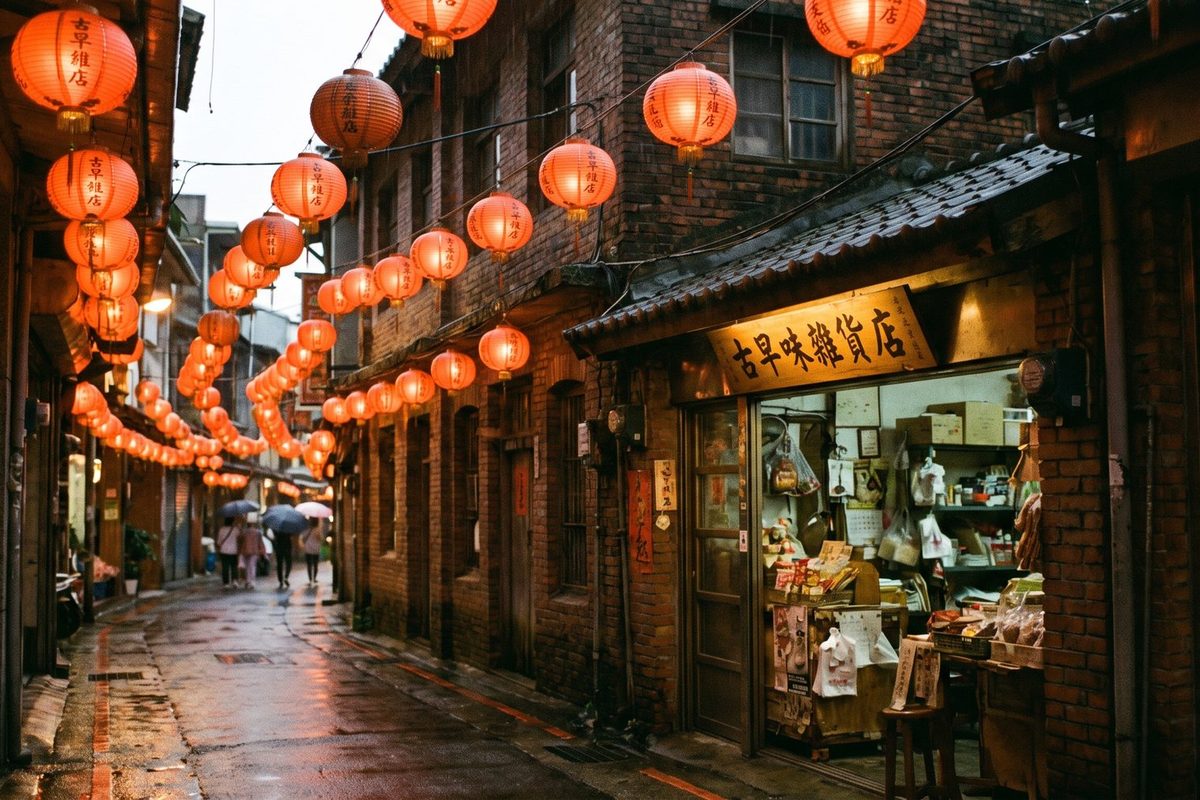
Stand at a Taiwanese temple on the first day of Lunar New Year and what you see, more than anything else, is red: red lanterns overhead, red paper couplets flanking every doorway, red envelopes changing hands between grandparents and children. The colors that surround a Taiwanese festival are not decoration — each one carries meaning accumulated over centuries of tradition, belief and daily life. This guide explores what Chinese colors mean in Taiwan: why red dominates celebration, why white belongs to mourning, what gold signals at a temple, and how the full range of colors in Mandarin shows up across Taiwan's festivals, ceremonies and everyday routines.
Colors in Mandarin Carry Cultural Weight
In many cultures, colors are largely aesthetic choices. In Taiwan, they function as a shared symbolic language. The colors in Mandarin that signal celebration, mourning, good fortune, and spiritual power have been codified over centuries — in court ritual, religious practice, and everyday custom. That system is still alive and working today, in the colors families choose for a wedding, the flowers a visitor brings, and the paper burned at a graveside.
Understanding this system helps you read a Taiwanese ceremony with new depth. When 紅 (hóng, red) means "luck and protection," and 白 (bái, white) means "mourning," you are not just memorizing vocabulary — you are learning how the world is organised in Taiwanese cultural thought. For a vocabulary reference covering ten core colors in Mandarin with pinyin and pronunciation, see the companion guide to Chinese colors in Mandarin. This guide focuses on what those colors mean.
Red — 紅色 (hóngsè): celebration, luck and the red envelope
No color carries more symbolic freight in Taiwan than 紅 (hóng, red). It is the color of luck, joy, vitality, and protection from evil — a meaning that shows up at every significant moment in Taiwanese life from birth to marriage.
The red envelope — 紅包 (hóngbāo, literally "red package") — is the most visible expression of this symbolism. At Lunar New Year, grandparents and relatives give red envelopes containing cash to children and unmarried adults. The red wrapper signals that what is inside carries a blessing, not just a monetary value. The same red envelopes appear at weddings (guests give them to the newlyweds), at the birth of a child, and at business openings. The color is inseparable from the gift.
Red is also protective. Red paper couplets (春聯, chūnlián) are pasted on doorframes at Lunar New Year to ward off evil, and the custom continues not because the legend is literally believed, but because it carries the meaning forward. At weddings, brides traditionally wear a red qipao or add a red sash; temple altars burn red candles; the lanterns at the Lantern Festival (元宵節, Yuánxiāo Jié) glow red against the winter sky. Red in Chinese means: this occasion matters.
The word: 紅色 (hóngsè) — second tone, rising. The character 紅 combines the silk radical 糸 with the phonetic component 工, a reference to red-dyed silk, the most prized textile in ancient Chinese court life.
White — 白色 (báisè): mourning, purity and the contrast with the West
If red is the color of celebrations, white (白, bái) is the color of their opposite. In traditional Taiwanese and Chinese custom, white is the primary mourning color — a sharp contrast with how white functions at Western weddings. Mourners wear white or plain grey. White chrysanthemums (菊花, júhuā) are the conventional funeral flower; bringing them to a birthday or first visit to someone's home would be a serious social mistake.
The cultural logic is ancient. In traditional Chinese cosmology, the five directions correspond to colors: west — the direction of the setting sun and endings — is white. That cosmological link still shapes the felt associations of 白色 today. In everyday speech, white is neutral — white shirts, white rice, white walls — but at a celebration, the association with endings is enough to make an all-white gift feel inauspicious.
A practical note: giving someone all-white flowers, a gift wrapped entirely in white, or a white clock (白鐘, bái zhōng — the word 鐘 "clock" sounds like 終 "end") at a happy occasion carries inauspicious associations. When in doubt, mix the white with another color.
Gold — 金色 (jīnsè): prosperity, temples and offerings to ancestors
Gold (金色, jīnsè) is the color of prosperity, the divine, and the connection between the living and the dead. Walk into almost any Taiwanese temple and you are surrounded by gold: gilded surfaces on deity statues, gold-painted pillars, and stacks of joss paper (金紙, jīnzhǐ — literally "gold paper") waiting to be burned as offerings.
Families burn joss paper at funerals and temple festivals as offerings to ancestors and deities — the gold color of the paper signals value and care. Gold and red together form the most auspicious color combination in Taiwan. Temple façades, Lunar New Year ornaments, lucky charms sold at night markets, and the regalia of local deity processions all draw on this pairing. If you see something spectacularly gold and red at a Taiwanese temple fair or night market stall, it is almost certainly marking a blessing, a deity, or a celebration. The combination reads, without words, as: fortune is here.
The word: 金色 (jīnsè) — first tone, level and high. 金 means both "gold" and "metal" — it is one of the five classical elements in Chinese philosophy, associated with autumn, the west, and strength.
Yellow — 黃色 (huángsè): imperial power and Buddhist practice
Yellow (黃色, huángsè) connects Taiwan to two distinct histories. The first is imperial: for centuries in China, yellow was the exclusive color of the emperor. The yellow-tiled roofs of the Forbidden City, the yellow robes of the imperial household, and the yellow banners of court ceremony were all reserved for the Son of Heaven alone. Wearing yellow without imperial permission was a grave offence. That association between yellow and supreme power, while no longer enforced, still gives the color a formal, elevated quality in cultural memory.
The second history is Buddhist. The saffron-yellow robes worn by Buddhist monks and nuns are a common sight at Taiwan's many temples, connecting yellow to spiritual seriousness and the pursuit of wisdom.
Green — 綠色 (lǜsè): nature, growth and Taiwan's landscape
Green (綠色, lǜsè) in Taiwan is first and foremost a color of the natural world. The island is mountainous and subtropical, and the lush green of its forests, terraced tea gardens, and rice paddies is a defining feature of its visual identity. The phrase 青山綠水 (qīngshān lǜshuǐ — "green mountains and lush waters") is one of the most common descriptions of Taiwan's scenery, appearing in everything from travel writing to schoolbook descriptions of the island.
At Lunar New Year, fresh green vegetables appear prominently in market displays as symbols of vitality and growth for the year ahead. The color is associated with spring, new beginnings, and the energy of living things. In traditional Chinese thought, green-blue (青, qīng) is the color of the east — the direction of the rising sun, of spring and new growth — reinforcing the connection between green and the renewal of life.
In contemporary Taiwanese fashion and design, 綠色 is widely used without particular symbolic weight, but in ceremonial or festive contexts it retains its association with vitality and the natural world.
Purple — 紫色 (zǐsè): nobility, mystery and temple textiles
Purple in Chinese culture carries associations of nobility and imperial power. The Forbidden City in Beijing is called 紫禁城 (Zǐjìnchéng) — literally "Purple Forbidden City" — because ancient astronomers associated the North Star with purple, and the emperor's palace mirrored that heavenly axis.
In Taiwan, purple (紫色, zǐsè) appears in temple textiles and the ornate clothing worn by deity statues during festivals. The ceremonial regalia of Mazu (媽祖), the sea goddess whose temples line Taiwan's coastal towns, often includes deep purple and gold fabrics. Purple also appears in the decorations for temple anniversaries and deity birthdays, adding a note of mystery and spiritual gravity to the celebrations.
In everyday life, lavender and lighter shades of purple Chinese speakers call 淡紫 (dàn zǐ) are popular in clothing and stationery, stripped of their ceremonial weight and used simply for their quiet elegance.
Black — 黑色 (hēisè): strength, formality and the night
Black (黑色, hēisè) in Taiwan has a more neutral profile than red or white, but it carries distinct associations in formal and ceremonial contexts. Black clothing is standard for funerals (alongside white), and black is associated with solemnity, gravity, and the seriousness of formal occasions. Black cars, black suits, and black ink all draw on a sense of authority and weight.
In traditional Chinese cosmology, black is the color of the north, associated with winter and water — one of the five classical elements. The character 黑 is a pictograph: scholars trace it to an ancient form showing smoke blackening a surface above a fire, connecting the character visually to its meaning.
Mandarin idioms pair black and white for moral clarity: 黑白分明 (hēibái fēnmíng — "black and white clearly distinguished") means to tell right from wrong. Black is not simply negative — it is one pole of a necessary contrast.
Blue — 藍色 (lánsè): the ocean, the sky and Taiwan's island identity
Blue (藍色, lánsè) is the color of Taiwan's surrounding ocean and its clear autumn skies. The island's identity is partly maritime, and 藍色 carries the openness and calm of a coastal landscape. In everyday speech, 天空是藍色的 (tiānkōng shì lánsè de — "the sky is blue") and 海水是藍色的 (hǎishuǐ shì lánsè de — "the sea is blue") are among the most natural color sentences a child first learns.
The Chinese idiom 青出於藍,勝於藍 (qīng chū yú lán, shèng yú lán — "blue-green comes from indigo but surpasses it") means a student can outshine the teacher — a saying heard often in Taiwanese schools. Blue functions more as an everyday color: calm, open, associated with nature and the horizon rather than ceremony.
Auspicious and Inauspicious Combinations
Colors in Taiwan are rarely read in isolation. Certain combinations carry strong collective meanings:
Red and gold (紅 + 金): the most auspicious pairing. Associated with prosperity, celebration, and divine blessing. Used at weddings, Lunar New Year, and temple festivals. If you see this combination, something fortunate is being marked.
White and grey (白 + 灰): mourning colors. Appropriate for funerals and memorial occasions. Wearing this combination to a celebration would be a significant social error.
Red and white (紅 + 白): a complicated combination. In some contexts, mixing the joy of red with the mourning of white can feel inauspicious. At Taiwanese funerals, however, red items are sometimes used for older relatives who have lived full lives — their death is both mourned and celebrated. The pairing needs context.
Yellow and gold (黃 + 金): reinforces the association with imperial power and the divine. Common at temple ceremonies and spiritual gatherings.
Using Color Meanings Naturally in Conversation
When you know what colors in Mandarin mean in Taiwan, you use them more naturally. Saying 這個紅色的禮物好漂亮!(Zhège hóngsè de lǐwù hǎo piàoliang! — "This red gift is so beautiful!") at a wedding carries appreciation for both color and meaning. Describing Taiwan as 青山綠水 (qīngshān lǜshuǐ — "green mountains and lush waters") reads as culturally aware, not just translated. The vocabulary of colors in Mandarin is a small set of words, but learning the cultural layer alongside the pronunciation is what turns a vocabulary list into a living language.
If you are helping a child connect with that living language, Coachers.org teaches Chinese through Taiwan stories to heritage and bilingual children aged 5 to 12. Its online courses weave cultural themes — including the colors, symbols, and festivals of Taiwan — into every unit.
FAQ
Why is red so important in Taiwanese culture?
Red (紅色, hóngsè) is the color of celebration, luck, and protection in Taiwan. It appears at Lunar New Year on red envelopes (紅包, hóngbāo), paper couplets (春聯, chūnlián), and lanterns; at weddings on the bride's sash and the decorations; and at temple festivals on candles and banners. The association with luck and the warding off of bad spirits makes red the most important ceremonial color in Taiwanese culture.
Why is white associated with funerals in Taiwan?
White (白色, báisè) is the mourning color in traditional Taiwanese custom because, in classical Chinese cosmology, white is associated with the west — the direction of death and the setting sun. At Taiwanese funerals, mourners wear white or plain grey. White chrysanthemums are the funeral flower. Giving white flowers or a gift wrapped in white at a celebration is considered inauspicious.
What does gold mean in Taiwan?
Gold (金色, jīnsè) represents prosperity and the divine in Taiwan. It is the color of temple decorations and the gold paper (金紙, jīnzhǐ) burned as offerings to ancestors. Gold and red together are the most auspicious pairing, seen at every temple fair, wedding, and Lunar New Year celebration.
What do green and purple mean in Taiwanese culture?
Green (綠色, lǜsè) is associated with nature, growth, and vitality in Taiwan — the island's mountains, tea gardens, and rice paddies make it a constant presence. Purple (紫色, zǐsè) carries associations of nobility from the name of the Forbidden City (紫禁城, Zǐjìnchéng) and appears in temple textiles and ceremonial regalia, adding mystery and spiritual gravity to festivals.
Where can a child learn Chinese through Taiwan stories?
Coachers.org teaches Chinese through Taiwan stories to heritage and bilingual children aged 5 to 12. Parents can use the contact page to ask which of the three levels — Bridge, Connect, or Express — fits their child.